
Resource Leverage Matrix™
Where AI Changes Work
The Resource Leverage Matrix helps leaders think clearly about how roles change as new forms of intelligence are introduced into real work.
It maps role evolution alongside resource strategy, from reducing effort to investing intentionally, and from transforming work to enhancing it. The goal is not prediction. It is orientation. This view helps leaders understand where change is likely to require more care, more support, and more deliberate investment in people.
We do not avoid the reality that some work will no longer exist. At the same time, elimination is rarely the whole story. In practice, tasks are removed, roles evolve, and new capabilities emerge as people learn to work differently with intelligence in the system.
This matrix exists to help leaders face those tradeoffs honestly and decide where to redesign work, invest in skills, and create new opportunities rather than letting change happen by default.
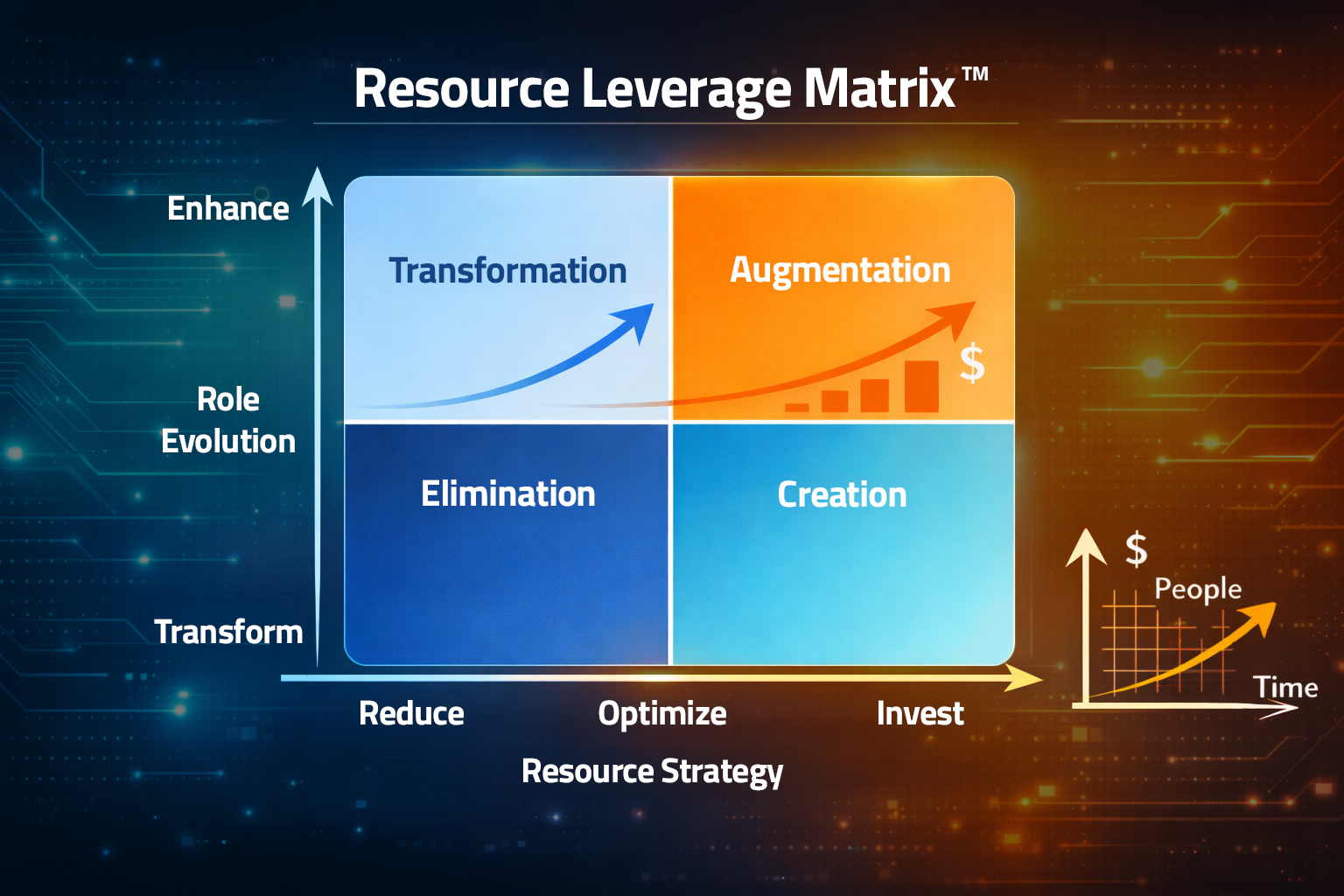
- Elimination:
Some tasks no longer need to be done by people as work changes. In these cases, repetitive or low-value activities are removed from roles altogether. The work itself goes away, which requires leaders to address the impact on people directly rather than letting it happen quietly. - Transformation:
The nature of a role changes, even though its core responsibility remains. Workflows, decision support, and expectations shift, requiring people to learn new ways of working and apply judgment differently as intelligence becomes part of the process. - Augmentation:
Roles remain largely intact, but the work becomes easier, faster, or more informed. People are supported with better information, reduced manual effort, or improved insight, allowing them to spend more time on coordination, problem solving, and decision making. - Creation:
New roles and capabilities emerge as organizations rethink how work gets done. As intelligence is applied intentionally, new kinds of work appear that did not previously exist, creating opportunities for growth, reskilling, and expanded responsibility.
Not Sure Where to Start?
You do not need more tools. You need clarity on where automated intelligence will actually improve decisions and where your organization is ready to apply it.